
Disclosure: This post contains affiliate links. If you buy something through these links, I may earn a commission. If some links are not working try turning off your ad-blocker or VPN.
Wondering what to see in Colico? Colico doesn’t try to be pretty the way Bellagio or Varenna do, and that’s exactly what makes it worth a stop. Sitting at the very top of the lake, where the Adda River flows in and the mountains close in around the water, it’s flatter, quieter, and a lot more about forts, an ancient abbey, and open-water sports than cobblestone streets, but there is still plenty of things to do in Colico. It’s also the natural gateway if you’re heading further north into Valtellina or Valchiavenna, and I’ll cover a bit of both here too, since they’re close enough to be worth the detour.
Quick Navigation
Things to Do in Colico
If you’re wondering what to see in Colico, here’s the short version: two historic forts, a genuinely peaceful abbey, some of the best wind-sports conditions on the whole lake, and a couple of worthwhile detours further north. It’s a different kind of day than the postcard towns further south, more active, more historical, less about the perfect photo. Here’s everything worth doing, in the order I’d actually visit it.
How to Get to Colico
Colico is easy to reach directly by train from Milan on the same line I cover in my Valtellina Wine Tour guide (RE8 Milano–Lecco–Colico–Tirano, or R13 toward Sondrio). It’s also the northern terminus of the main Lake Como ferry line, so you can arrive by boat from further south too, see my guide to the best Lake Como boat tours if you’d rather book a private crossing than rely on the public timetable.
A Bit of History
Colico has been a strategic gateway since long before it was a tourist stop, sitting right where routes toward Valtellina, Valchiavenna, and the Alpine passes into Switzerland all converge. The 15th century was rough on the town: repeated invasions and pillaging by passing armies, plus chronic flooding from the Adda and outbreaks of malaria in the marshy lowlands. The Spanish took control in the 1500s and built Forte di Fuentes in 1603 to secure the routes north. The 17th century brought a real revival, Spanish land reclamation projects drained the worst of the marshland, and new roads over the Alpine passes turned Colico back into a genuine commercial and military hub.
Forte Montecchio Nord
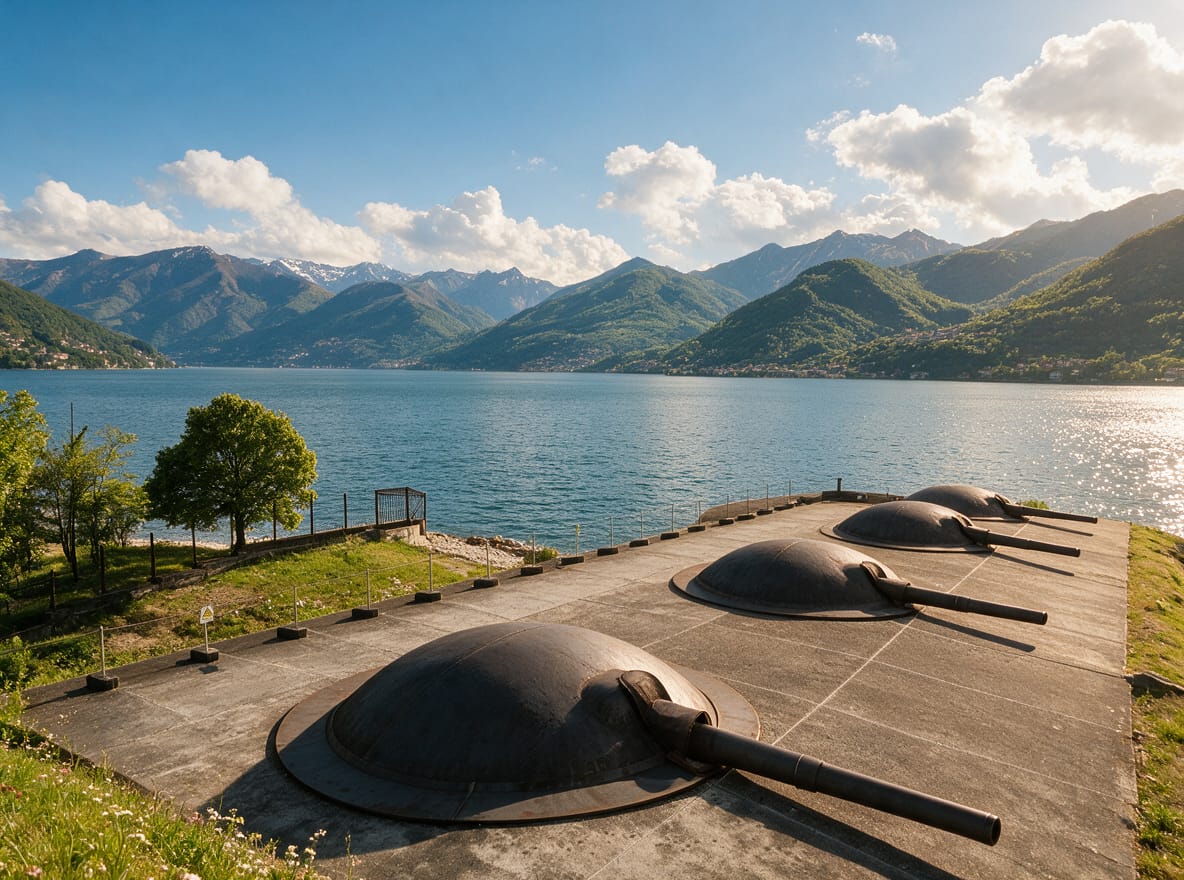
This is genuinely one of the best-preserved WWI fortresses left in Europe. Most forts from that time elsewhere were stripped for scrap or fell apart; this one still has its original French Schneider 149mm guns intact, and they can still be moved and elevated. It fired the last artillery shots of WWII in Italy, on April 28, 1945, stopping a column trying to escape north. Entry is by guided tour only, hourly, about an hour long, with tours available in English. Tickets can be bought on-site or checked in advance on the official Forte Montecchio Nord website.
Forte di Fuentes
Older than Montecchio, this Spanish fort dates to 1603 and controlled the routes north into the mountains. It’s more of a ruin today than Montecchio, but genuinely atmospheric, and walkable from the same area. A combined ticket covering both forts is the better-value option if you’re doing both (around €15). Full opening hours and ticket details are on the official Forte di Fuentes website.
Abbazia di Piona (Piona Abbey)
A 12th-century Cistercian monastery on the quiet Olgiasca peninsula, still home to an active community of monks today. The Romanesque-Gothic cloister (13th century) is genuinely atmospheric, and it’s one of the more serene stops on this whole guide. The monks make and sell honey, herbal liqueurs, and a limoncello that multiple visitors specifically call out as excellent, in a small shop attached to the abbey. Entry to the abbey itself is free; a combined ticket with Forte Montecchio Nord is available for around €15. Opening hours and more details are on the official Abbazia di Piona website.
The Lakeside Promenade & Piazza Garibaldi
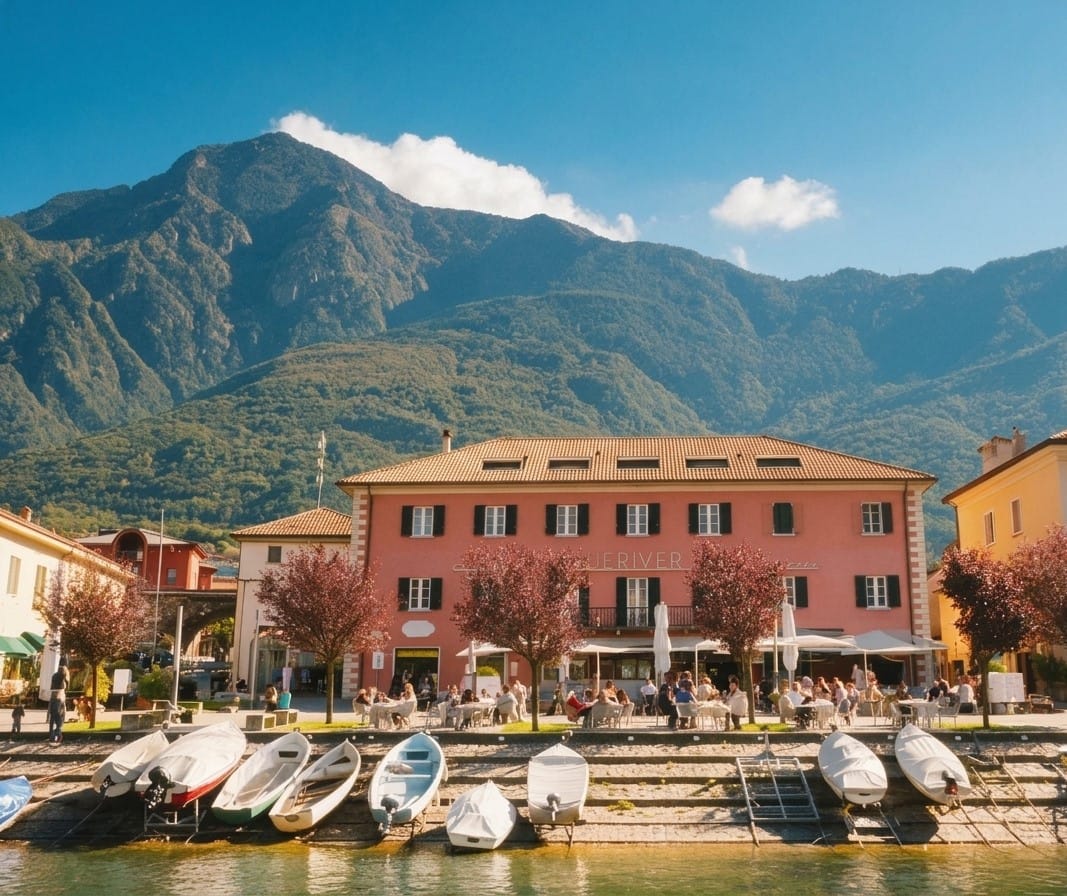
A palm-lined promenade and the town’s main square, with an illuminated fountain at night. This is where the town actually gathers, restaurants, cafés, and the harbor.
Beaches & Watersports
If you’re looking for active things to do in Colico, this is where it happens. Colico is a genuine wind-sports destination, thanks to the Breva, a reliable thermal south wind that blows from March through September. The flat grassy launch area locals call “Pratone” is the main spot. Colico actually hosted the Kitesurf World Cup back in 2006 and 2008, it’s not an annual fixture today, but it tells you how seriously this stretch of water is taken by the sport. Beyond kitesurfing and windsurfing, there are a few real beaches too, including the “Spiaggia Selvaggia” (Wild Beach), a genuinely unspoiled stretch near where the Adda flows into the lake.
Horseback Riding
A proper local experience, and a good match for Colico’s more outdoorsy character. Rides depart from a ranch just outside town, with 1 or 2-hour options suitable for beginners. The 2-hour version rides out toward the first paths of the Valtellina region, a nice preview if you’re headed that way next.
Book the horseback riding tour here ⭐ 4.6 (114 reviews)
Hiking: Monte Legnone & Sentiero del Viandante
Monte Legnone (2,609m) is the tallest peak overlooking the lake, a serious hike for anyone properly equipped. For something gentler, the Sentiero del Viandante (“Wayfarer’s Path”) is an old mule track that runs along the eastern shore and passes through the Colico area, genuinely one of the best low-effort ways to see the lake from above without a full mountain hike.
Wine Tasting at a Real Family Vineyard
Right on the Montecchio Sud promontory, a small family-run vineyard has been growing Pinot Nero since 2020 (first harvest 2023), on land that belonged to the owner’s great-grandfather. It’s a genuinely small, personal operation rather than a big commercial tasting room, walk through the vines, hear the family’s story, then taste their wines alongside farm-made salami, local cheese, and a honey grappa made from their own hives. A free shuttle picks you up from Piona station.
Book the vineyard wine tasting here
Where to Eat: The Crotti
A distinctive local detail worth knowing about: “crotti” are small restaurants built directly into natural caves in the mountainside, in the Curcio and Laghetto areas near Colico. The constant cool temperature inside made them ideal for aging cheese and cured meat for centuries, and many are now genuinely atmospheric places to eat.
The Pian di Spagna: The Valley Between Colico and Chiavenna
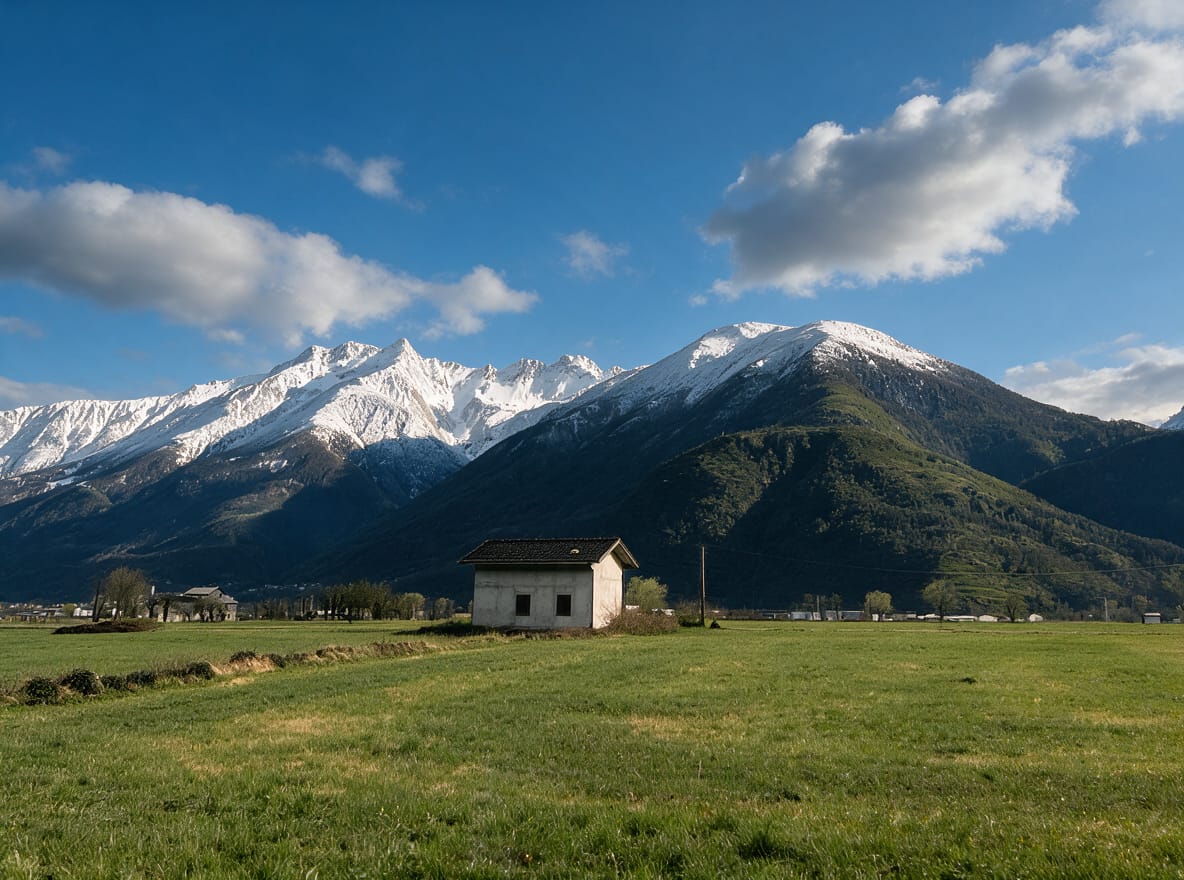
This is one of the most interesting things about the area, and most visitors have no idea it’s here. The flat valley you pass through between Colico and Chiavenna is called the Pian di Spagna, the “Spanish Plain,” and it has a genuinely surprising origin story.
In Roman times, Lake Como and the neighboring Lake Mezzola were actually one single body of water. Over the centuries, flooding from the Adda and Mera rivers deposited enough silt and rock to build up a marshy plain that eventually split them into two separate lakes. The name comes from the 16th–18th century, when this marshland was occupied and partially drained by the Spanish, who controlled the Duchy of Milan at the time.
Today it’s a protected nature reserve, established in 1983 and internationally recognized as an important wetland, a genuinely peaceful stop for birdwatching if that’s your kind of thing, and a nice contrast to the busier parts of the lake further south.
Gateway to Valchiavenna: A Short Detour to Chiavenna
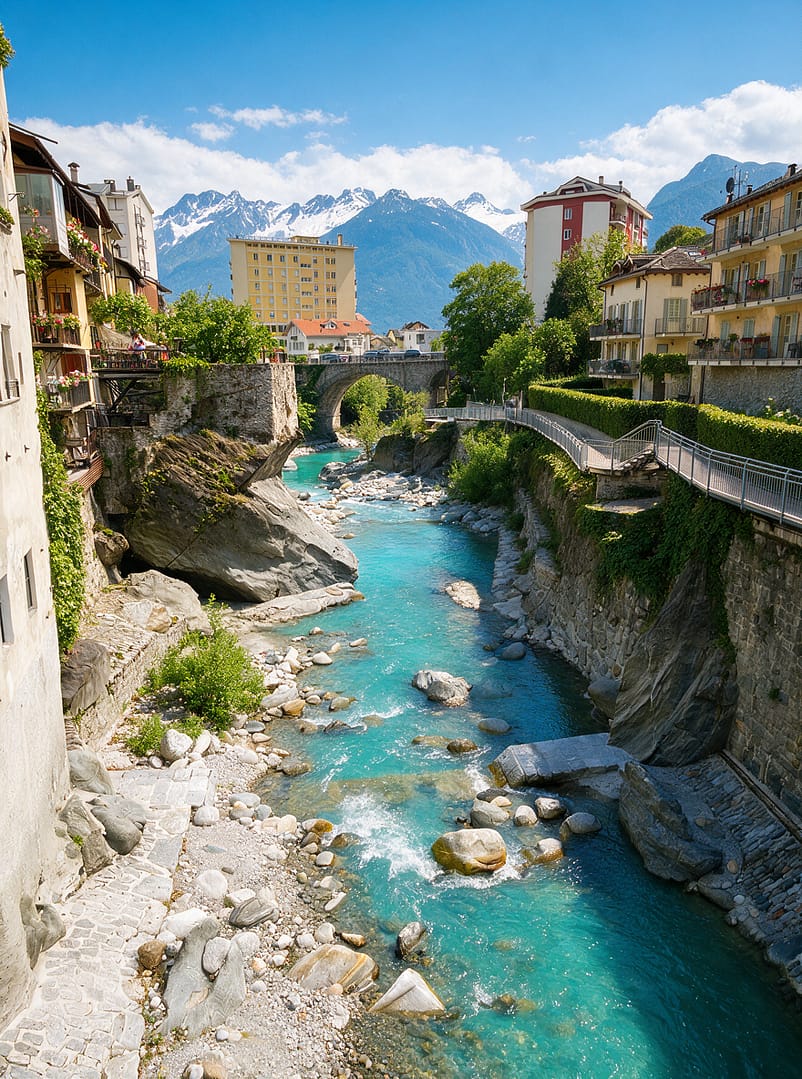
If you have extra time, Chiavenna is genuinely worth the short trip north, about 30 minutes by train or car past the Pian di Spagna. It’s technically past the lake itself, toward the Swiss border, but close enough to Colico that I think it’s worth mentioning here.
It’s a small alpine town with a real medieval old town, cobblestone streets, and stone palazzos, recently praised by The Guardian as one of Italy’s quietly romantic hidden gems. Its real claim to fame is the “crotti”, the same style of cave restaurants as near Colico, but Chiavenna has over a thousand of them carved into old landslide rock, with a constant temperature of around 8°C year-round. Many are now atmospheric little restaurants for a proper aperitivo with bresaola. If you’re around in early September, the Sagra dei Crotti opens them all up for a weekend of local food and wine.
Worth a look too: the Collegiate Church of San Lorenzo, founded around the 5th century, which holds the “Pace di Chiavenna,” an 11th-century gold-covered bible binding that’s a genuinely remarkable thing to see in person.
A Local Food Detour: The Historic Shop in Morbegno
On the Valtellina side, it’s worth a stop at Bottega Fratelli Ciapponi in Morbegno. A family-run shop trading since 1883, over 140 years continuously, founded by brothers Paolo and Emilio Ciapponi, who learned the trade working in small grocery shops in Rome before returning home. The original shopfront sign is still there: “Drogheria – Granaglie – Formaggi – Cordami” (Grocery – Grains – Cheese – Rope). The real surprise is behind the counter: a maze of vaulted underground cellars aging wheels of Bitto DOP cheese, some up to 10 years old, alongside Valtellina Casera DOP, local cured meats, and Valtellina wines and grappas.
If you want to taste some of what Valtellina is actually known for while you’re in the area, there’s also a brand-new cheese tasting experience with a typical lunch right near Morbegno, genuinely new on GetYourGuide with no reviews yet, but the pairing with everything above makes it worth a mention.
Check out the Valtellina cheese tasting near Morbegno here (new experience, no reviews yet)
Gateway to Valtellina
If wine is more your thing than cheese, Colico is also the recommended base for my full Valtellina Wine Tour from Lake Como guide, the exact same train line covered there starts right here.
Where to Stay in Colico
For hotel picks in Colico and every other town on the lake, see my full Where to Stay in Lake Como guide.
Between the forts, the abbey, the watersports, and the detours north, there are genuinely enough things to do in Colico to fill two or three full days if you take your time with it, more than most visitors expect from a stop this far up the lake.